
Equipment Highlights
Here are the best of Wilorco’s World Class Equipment


Engineering Design and Analysis Tools

Extended Overview of Circuit Analysis and 3D Parametric Solid Modeling Software
Altium: Schematic Capture, Analysis, and Printed Circuit Board Design
Capabilities:
Schematic Capture: Provides an intuitive environment for creating and managing electrical schematics.
PCB Layout Design: Offers advanced routing tools, interactive editing, and multi-layer board design capabilities.
Signal Integrity Analysis: Ensures high-speed PCB designs function as intended by minimizing noise and interference.
3D PCB Visualization: Allows designers to view and analyze PCB layouts in a 3D environment for better integration.
Design Rule Checking (DRC): Automatically verifies PCB designs for manufacturability and electrical correctness.
Multi-Board System Design: Supports the design of interconnected PCBs within a single environment.
Thermal Analysis: Helps designers evaluate and optimize heat dissipation in PCB designs.
Advantages of Using Altium
Industry-Leading PCB Design Software: Trusted by professionals for high-performance circuit board design.
Seamless Integration with ECAD/MCAD: Allows for smooth communication between electronic and mechanical design teams.
Efficient Routing Algorithms: Reduces design time with auto-routing and intelligent placement features.
Extensive Library Support: Includes up-to-date components with manufacturer specifications.
Design Validation & Testing: Minimizes errors with advanced verification tools before fabrication.
Purpose:
Professional PCB Design: Ideal for engineers developing complex electronic circuits.
High-Speed and RF Circuit Design: Supports signal integrity for fast data transmission applications.
Prototype and Mass Production: Optimized for both small-scale prototyping and large-scale manufacturing.
SolidWorks: 3D Parametric Solid Modeling, Structural & Thermal Analysis for Electronics Packaging
Capabilities:
3D Parametric Modeling: Allows detailed and dynamic design modifications using parametric constraints.
Assembly Design: Enables the creation of complex assemblies with precise component placement.
Structural and Thermal Analysis: Conducts finite element analysis (FEA) for stress, strain, and thermal performance of enclosures.
Motion Simulation: Analyzes mechanical movement to optimize the design of enclosures and cooling systems.
Electronics Cooling Simulation: Integrates with tools like SOLIDWORKS Flow Simulation to evaluate heat dissipation and airflow.
Integration with PCB Design Tools: Works seamlessly with ECAD tools to import PCB designs for enclosure fitting.
Rendering and Visualization: Offers high-quality rendering for presentations and marketing materials.
Advantages of Using SolidWorks
Versatility: Supports a wide range of applications, from mechanical design to electronics packaging.
Comprehensive Simulation Tools: Reduces the need for physical prototypes by validating designs digitally.
Mechanical and Structural Analysis: Ensures enclosures withstand mechanical stresses and environmental conditions.
Heat Dissipation Analysis: Optimizes cooling solutions for high-power electronics to prevent overheating.
Product Development: Ideal for designing consumer electronics, industrial equipment, and IoT devices.
Manufacturing Optimization: Assists in designing for manufacturability (DFM) and assembly (DFA) to reduce production costs.
By utilizing ORCAD: LTSPICE for circuit simulation and SolidWorks for mechanical and thermal design, engineers and designers can create optimized electronic products with enhanced performance and reliability.

ORCAD: LTSPICE Circuit Analysis Software
Capabilities:
Schematic Capture: Allows users to design circuit schematics with an extensive library of components.
Simulation and Analysis: Utilizes powerful SPICE (Simulation Program with Integrated Circuit Emphasis) engine to perform transient, AC, DC, noise, and parametric sweeps.
Component Library: Includes a comprehensive library of electronic components, enabling detailed circuit design.
Waveform Viewer: Provides graphical analysis of circuit responses to different input signals.
Monte Carlo and Worst-Case Analysis: Assists in identifying circuit behavior under various conditions.
Mixed-Signal Simulation: Supports analog and digital co-simulation for complex electronic systems.
Thermal and Power Analysis: Helps optimize circuits by considering power dissipation and thermal constraints.
Advantages of Using ORCAD: LTSPICE
Industry Standard: ORCAD is used by professionals in electronic design automation (EDA) for high-performance simulations.
Prototyping and Design Verification: Ensures circuits function as intended before PCB manufacturing.
Power and Signal Integrity Analysis: Evaluates circuit stability and efficiency for power electronics applications.
Electrical Test & ESS Equipment
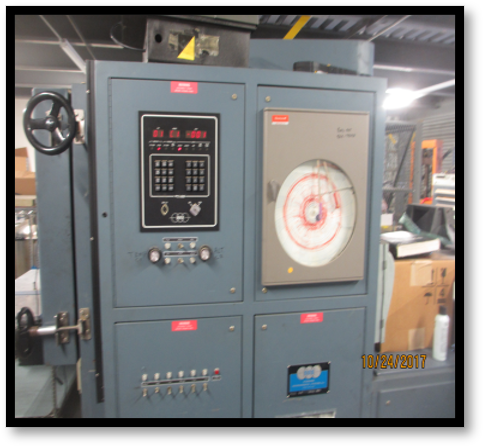 ESS Thermal/Coolant Chamber
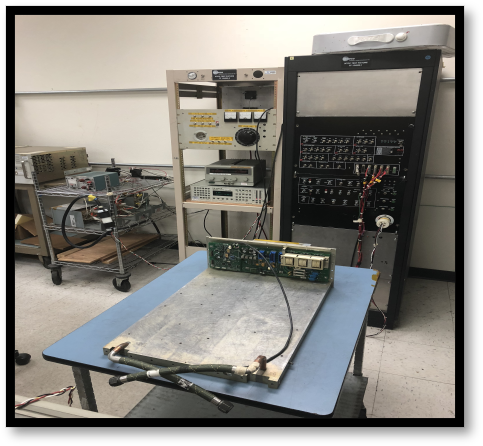 Custom (FAT) Test Fixture
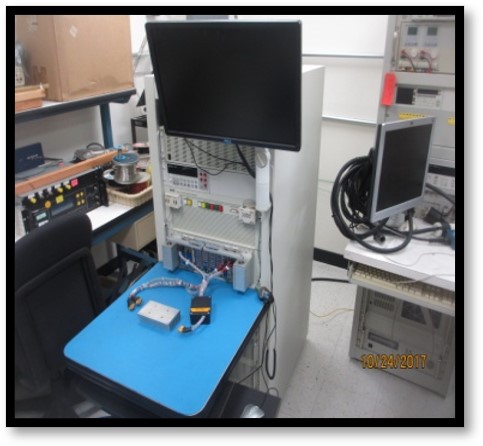 NHR 5600 AHR Test Fixture
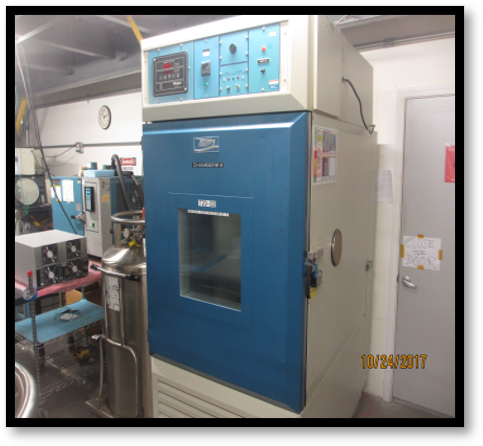 Power Supply Oven
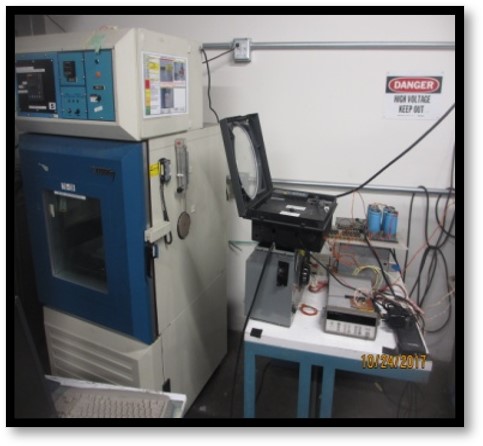 Recorder Test Fixture
Deep Dive
ESS Thermal/Coolant Chamber
Advantages: Ensures components function in varying environments, preventing failures in the field.
Custom (FAT) Test Fixture
Advantages: Provides repeatable and standardized testing to ensure compliance with design specifications.
NHR 5600 AHR Test Fixture
Advantages: Ensures accurate energy measurements and system safety for battery-powered applications.
Power Supply Oven
Advantages: Helps assess thermal performance and long-term reliability.
Recorder Test Fixture
Advantages: Ensures accurate signal processing and long-term stability in industrial and aerospace applications.
Environmental Stress Screening Equipment


Random and Sinusoidal 3-Axis Vibration Capability
Advantages: Ensures mechanical stability and resilience in aerospace, automotive, and electronic applications.
Superposition Sine on Random Vibration Capability
Advantages: Helps assess structural integrity under simultaneous sinusoidal and random vibrations.
Combined Temperature Altitude Testing
Advantages: Essential for aerospace and military-grade equipment validation.
Thermal Cycling Capability
Advantages: Identifies potential failures due to thermal stress over product lifespan.
Thermal Shock Capability
Advantages: Prevents failure due to sudden environmental shifts, crucial for aerospace and automotive applications.
Temperature and Humidity Chamber, Programmable
Advantages: Ensures product functionality in various climate conditions, ideal for consumer and industrial electronics.